


When you ask, ‘What is SERP?’ you’re uncovering the key to online searches. A SERP, or Search Engine Results Page, is what you see after typing a query into Google or any other search engine. Each SERP is personalized, often displaying a mix of organic results, paid ads, and unique features like knowledge panels, tailored to your search terms and history.
This guide offers a no-fluff introduction to SERPs. Explains their significance for web visibility, and why they’re a cornerstone of navigating the digital world effectively.
Key Takeaways
- SERPs are dynamic, user-tailored web pages comprising organic listings, paid ads, and a variety of SERP features influenced by location, search history, and personal settings.
- Organic search results are central to SERPs, determined by search engine algorithms, and dependent on effective SEO while paid ads and SERP features like rich snippets enhance visibility and user experience.
- The future of SERPs is likely to include increased interactivity, personalized search results driven by AI, and new features such as voice search, animations, and VR integrations.
Decoding SERP: A Comprehensive Overview

Search engine results pages (SERPs) are dynamic, custom-built web pages that present a combination of organic listings, paid advertisements, and various types of rich content in response to our queries. These web pages adjust according to individual search engine users through algorithms that consider location, search history, and personal preferences. They strive to direct us toward the most pertinent pages for our inquiries.
In order to ensure we receive highly relevant and precise information from Google search results or any other major platform’s SERPs, an ongoing process for developers. Continuous updates refine how these engines sort data—this relentless progression shapes each user’s distinct journey across the vast digital landscape by providing a tailored experience aligning with their unique needs and searching habits.
The Anatomy of SERPs

Delving into the composition of Search Engine Results Pages (SERPs) unveils a sophisticated environment designed to enhance both user experience and involvement. The ecosystem consists not only of essential organic listings but also includes paid advertisements competing for prime positioning on the page. SERP features like images, tweets, and informative cards significantly contribute to this dynamic space.
These components don’t appear by chance. They are deliberately orchestrated by search engine providers. Their goal is to curate a results page that caters adeptly to their users’ wide-ranging inquiries and preferences.
Organic Search Results Unveiled
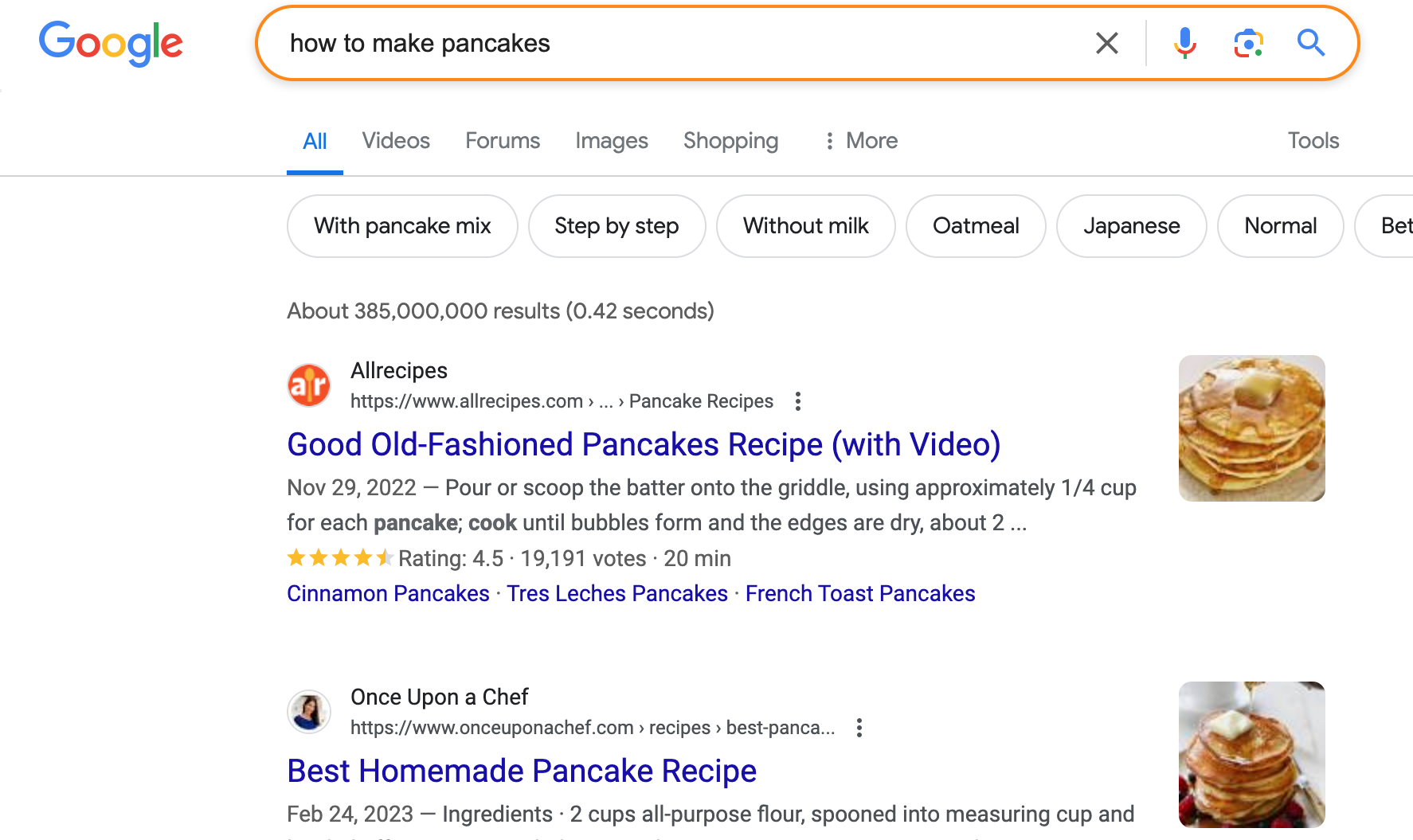
Search engine optimization (SEO) is a meticulous process that combines both creative and analytical approaches to boost a website’s visibility in organic search results. These listings emerge on the search engine results page (SERP) because they are deemed relevant and authoritative by the search engine’s algorithms, not through paid advertising. The stature these organic listings enjoy comes from the quality of their content as well as strong link profiles.
The appearance of websites within these sought-after organic positions signals their compliance with an array of ranking factors considered by search engines’ complex algorithms. For site owners, this equates to hard-earned validation for aligning their sites closely with these criteria. Such placement in organic results underscores a commitment to providing genuine value. It conveys legitimacy and engenders user trust, drawing users toward what they perceive will fulfill their informational needs.
Paid Ads: Navigating the Top of the SERP

Paid ads, akin to mountain peaks, crown the SERP. These are the results of strategic battles where advertisers bid on relevant keywords, placing their stakes in the digital ground in the hopes of capturing the attention of potential customers. The effectiveness of these ads is underscored by the fact that a majority of clicks on transactional search queries are drawn to them, particularly when they appear at the top of the page. Adorned with a discreet ‘Ad’ label, these listings are engineered for visibility and designed to target specific keywords and demographics through platforms like Google Ads.
Yet, navigating the topography of paid search is akin to charting a course through treacherous waters. Success requires more than just a financial investment; it requires a keen understanding of keyword selection and an appreciation for the value of high-competition terms. These are the signifiers of valuable traffic, the digital thoroughfares where businesses can capture the attention of their audiences.
Rich Snippets and Featured Snippets: Enhancing Visibility

Within the cluster of organic search results, featured snippets and rich snippets stand prominently. They provide a preview with additional details that entice users to click through. Comparable to striking exhibits in an expertly arranged gallery, they capture attention and offer an invitation to explore more about the topic. Rich snippets come in various types including reviews, product specifications, and culinary recipes. They inject precise data that elevates the visibility of a web page within the Search Engine Results Page (SERP).
For website owners aiming to enhance their standard search engine results with the appeal of a rich snippet, they must implement structured data markup as per Google’s directives. This supplemental information can present instant value for visitors – from displaying available stock quantities to showcasing customer feedback. Thereby increasing prominence amidst fierce online competition. It is indeed an intricate craft whereby achieving proficiency can markedly elevate what was once ordinary into something remarkable for both search engines and those who use them.
Understanding SERP Features and Their Impact
As we traverse the online landscape, SERP features emerge as crucial landmarks that shape both the visibility of content and the experience users have while searching. These elements include rich results which bring a visual element to enhance the search engine results page. Alongside engaging components such as ‘People Also Ask’, decorating most search engine results with their presence.
The impact of these features is unmistakable. They are instrumental in heightening user engagement and could lead to an increase in click-through rates. Indeed, these aspects have become integral to modern search experiences on any given results page.
Knowledge Panels: Wisdom at a Glance
Knowledge panels act as concise, informative displays along the search engine results pathway. It delivers a wealth of data about entities such as organizations and individuals with ease. Sourced from the search engine’s Knowledge Graph, these panels amalgamate details from various online sources to provide direct answers to frequently asked questions in an organized manner on the right side of the results page. A standard knowledge panel does more than just encapsulate information on a subject. It also proactively offers options for related searches, facilitating users’ exploration efforts seamlessly.
For individuals seeking employment opportunities, Google’s job-specific knowledge cards compile job postings. These cards are part of a wider knowledge panel that utilizes an expansive network of informational nodes.
Local Packs and Maps: Localized Search Engine Results
Local packs are an acknowledgment by search engines of the need for geographically pertinent results. They feature local businesses with ratings, addresses, and hours that match a searcher’s location-based requirements.
When a search query includes a specific location, these local packs appear prominently on SERPs. It showcases a map adorned with pins representing different businesses along with their names, ratings, and ways to contact them. They frequently emerge in response to relevant queries—demonstrating their substantial role within the landscape of online searches.
To ensure inclusion in these desirable local packs companies must prioritize making their locations easily discoverable while maintaining strong customer review profiles. This is achieved through meticulous attention to local SEO strategies. It can significantly enhance both visibility in the digital space and actual visits to brick-and-mortar establishments when done correctly.
Image Packs and Video Results: Visual Content in SERPs

When the nature of a search query is such that visuals can best convey the answer, SERP features like image packs, step in to satisfy this need by presenting an assortment of related images tailored to quench the visual thirst of users. Video results intersperse throughout these pages providing active and engaging content options as alternatives to conventional text-based answers. It enriches the overall searching experience for queries requiring dynamic visual representation.
Achieving a prominent position within these visually oriented SERP features necessitates careful optimization. It’s crucial for images to be accurately labeled with informative alt text and videos should be distributed across diverse platforms. Implementing these tactics greatly enhances the chances for a website’s graphic content to appear prominently within Google Images’ search results.
The Evolution of Search Queries and User Intent
Search engines differentiate between various kinds of search queries, such as:
- Navigational queries serve as a digital compass pointing directly to a specific online domain. These are precise in their intention, typically guiding users straight to an identified website or page.
- Informational queries represent the thirst for knowledge. These are the inquiries made by individuals not yet inclined towards purchasing but rather seeking enlightenment on certain topics.
- Transactional queries signal those who have decided to make a purchase. Here, we find users proactively looking to conduct business transactions.
All these query types exhibit distinct intentions and prompt specialized SERP features from search engines.
Lastly, transactional searches symbolize stepping into an online shop with the resolution to spend. These action-driven investigations commonly encompass terms such as ‘purchase’, ‘place order’, or ‘get download’. They point unmistakably toward particular items or services. By fine-tuning content alignment with each kind of inquiry, search engines aim at aligning their SERP attributes closely with what lies beneath user aspiration. Thus amplifying both user satisfaction during searches and enhancing visibility for relevant content.
SEO and Its Relationship with SERPs
SEO serves as the driving force enabling websites to ascend within search engine results pages (SERPs), through meticulous optimization aligning with complex intricacies of search algorithms. When site owners tailor their website’s content and architecture, they enhance their likelihood of featuring in distinct SERP attributes such as knowledge panels and carousels.
Grasping how SERP features influence a website’s incoming traffic is vital for sustaining prominence amidst variable search engine outcomes. SEO resources like Moz, SEMRush, and Ahrefs provide critical insights into these interactions. They prove essential tools for navigating the constantly evolving terrain of online searches—aiding site owners in charting a successful course.
On-Page Optimization Techniques
The craft of on-page SEO hinges on:
- Skillfully embedding targeted keywords in the content, titles, and headers to align with what users are searching for.
- Crafting concise meta descriptions, clear URLs, and descriptive title tags that enhance a webpage’s definition and performance online.
- Implementing Schema markup which decorates page content with detailed rich snippets in search engine results pages (SERPs).
Solid site navigation and purposeful internal linking serve as the essential stitches binding together a website’s structure. These elements not only help search engines grasp the layout but also improve how visitors interact with the site. Cutting-edge solutions such as Accelerated Mobile Pages (AMP) are becoming integral to on-page optimization. They enhance mobile responsiveness which can positively impact where a site ranks in SERPs.
Off-Page Optimization Strategies
Off-page optimization techniques, such as link building and content marketing, reach out into the broad digital landscape to enhance a website’s authority and reputation. Digital endorsements from other websites, known as backlinks, convey to search engines that the site’s content is of high quality and credible—thus influencing its position on search engine results pages (SERPs). Top-notch backlinks from reputable sources parallel establishing alliances in the online world. Each strengthens the site’s status and contributes to improving its ranking within search results.
Through active participation on social media platforms and engaging in digital public relations efforts, a website can expand its influence. By capturing audience trust and magnifying its presence across various corners of the web. These off-page strategies are instrumental in thrusting a website’s content into prominence, enabling it to maintain visibility amidst fierce competition found within search engine result landscapes.
Harnessing SERP for Marketing Success
Expertly leveraging SERP features can transform a marketer’s strategy, turning search engine presence into tangible business achievements. At the top of the SERP, Google Shopping results capture valuable space. It provides an arena for product promotion to potential buyers who are already considering making purchases.
These shopping results may be few, but they carry influence with information such as names of products, prices, and ratings. To secure a position in these coveted spots, businesses must refine aspects like image quality and price competitiveness.
Similarly crucial are featured snippets and local packs which have the power to elevate websites right up to the forefront of search results while bolstering both reputation online and visitor traffic offline.
Advantages stemming from utilizing these features include:
- Positioning via well-crafted featured snippet projects your website as a leading authority on specific topics
- Local packs greatly increase exposure for community-focused enterprises
- Displaying transparent star ratings along with authentic customer feedback. It helps establish positions in SERP review sections thus strengthening trust among consumers while solidifying digital prestige.
Navigating the Future of Search Engine Results
Anticipating the evolution of search engine technology, it’s evident that future SERPs will be much more dynamic and interactive. They are expected to introduce features including sophisticated voice searches, captivating animations, and virtual reality components. The move towards providing instant answers directly within SERPs – known as zero-click searches. It underscores the urgency for marketers to evolve their tactics in order to stay prominent in a digital environment.
As algorithms become better at personalizing content, users can expect highly customized search outcomes. They can be informed by comprehensive data such as historical search activity, geographic location, and particulars from users’ Google accounts. To align with this tailored delivery of information requires a grasp on artificial intelligence advancements which are rapidly transforming how we interact with SERPs—and accordingly—the methodology necessary for effectively engaging these modern platforms.
Summary
Now it’s clear that SERPs are intricate, ever-evolving entities that serve as the gateway to the world’s information. From the bedrock of organic search results to the peaks of paid ads and the rich landscape of SERP features, we’ve uncovered the strategies that can help websites navigate and thrive in this digital ecosystem.
Whether through on-page enhancements or off-page tactics, the mastery of SEO is essential for climbing to the top of the SERP mountain. As search engines continue to evolve, with new features and algorithms, the quest for visibility remains a dynamic challenge. So marketers and content creators need to remain agile, informed, and ever-adaptable.
Frequently Asked Questions
What does SERP mean?
SERP stands for Search Engine Results Page. It’s the page you’re see after conducting a search on search engines like Google, Bing, or Yahoo. This page displays a combination of organic search results, paid advertisements, and various SERP features tailored to your query.
What is a SERP feature in SEO?
A SERP feature in SEO refers to any non-standard search result that appears on a Search Engine Results Page. These can include rich snippets, knowledge panels, local packs, featured snippets, image carousels, and more. SERP features enhance user experience by providing quick, relevant information and are highly sought after in SEO because they can improve visibility and click-through rates.
What is the use of SERP?
The use of SERP is to provide a user-friendly interface where searchers can find the most relevant information related to their query quickly and efficiently. They deliver a mix of content types, including web pages, images, videos, and location-based results. For businesses and content creators, SERPs are crucial for gaining visibility, driving traffic, and achieving online marketing goals.
How can I get my website to appear in a featured snippet?
Ensure that your website ranks on the first page for a given search term if you want it to be showcased in a featured snippet. It’s important to offer content that is not only well-organized and rich in information but also embedded with keywords relevant to the topic.
By adopting SEO best practices and straightforwardly addressing frequently asked questions, you can enhance your prospects of appearing within a featured snippet.
What role do backlinks play in off-page SEO?
Off-page SEO greatly benefits from backlinks as they serve as indicators to search engines of your website’s authority and credibility, potentially enhancing your rankings on the Search Engine Results Pages (SERP).

Add a Comment