

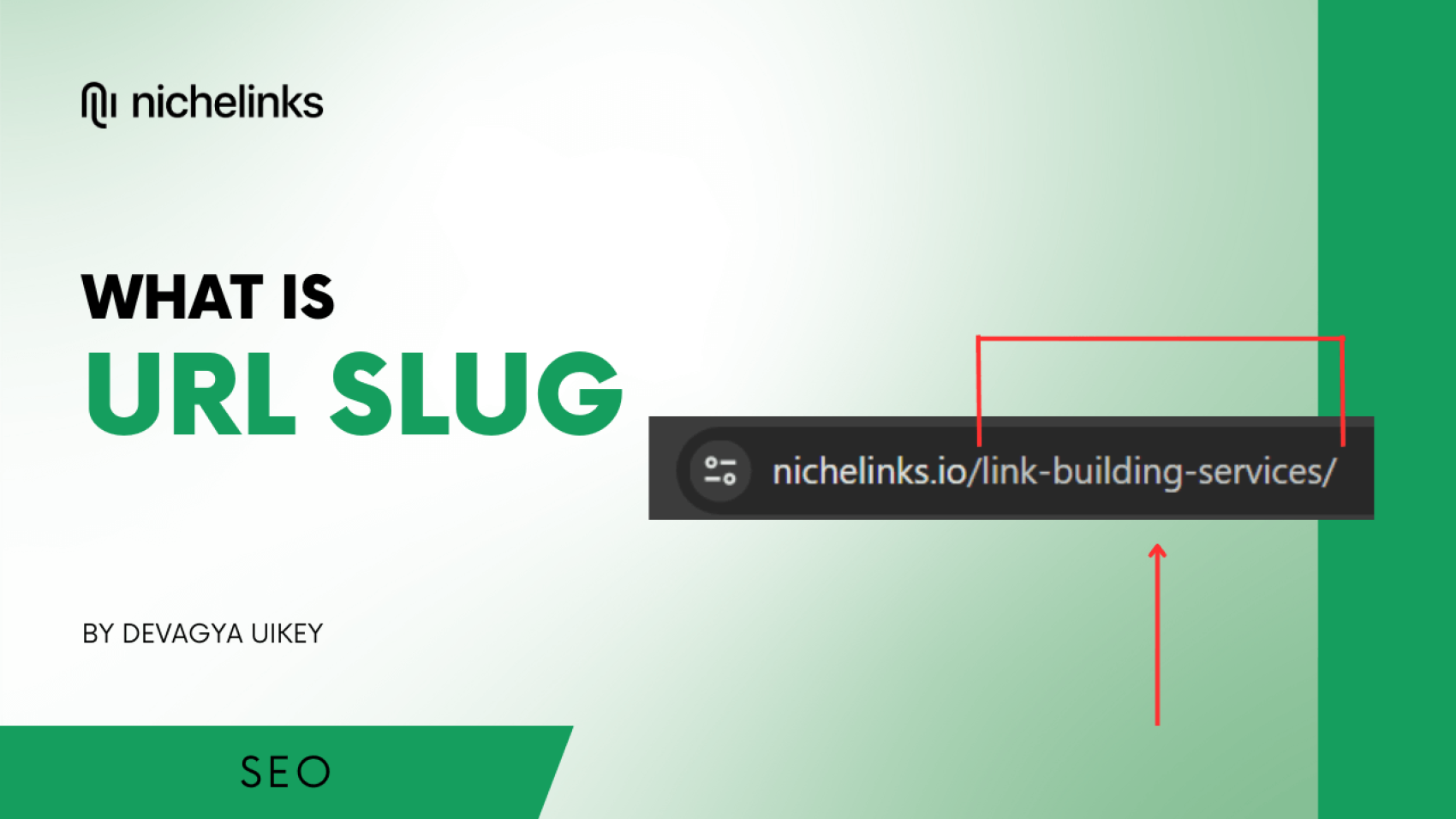
In the world of SEO, a question often asked is “What is a slug in SEO?” A ‘slug’ is that part of the URL coming after the domain name that tells both search engines and users what the page is about. It’s a small piece of the puzzle with huge implications for your site’s visibility and usability. This article will explore the nuances of slugs and provide practical tips for making them work in your favor.
Key Takeaways
URL slugs are vital elements in SEO, enhancing both the visibility in search engines and the user experience by providing clear, descriptive, and concise summaries of page content.
Incorporating keywords into URL slugs is beneficial for SEO, as it helps signal the content’s core topic to search engines and invites user engagement by aligning with their search intent.
Best practices for crafting effective URL slugs include keeping them short, using lowercase letters, separating words with hyphens, avoiding special characters and dates, and conducting A/B testing to optimize performance.
Crafting Your First Impression: The Impact of URL Slugs
Ever judged a book by its cover? Of course, we all have. In the digital world, URL slugs are a website’s cover, and they make a lasting first impression. A good slug is like a firm handshake – it’s confident, clear, and leaves a positive impact. It’s the part of the URL that tells a user they’re in the right place.
Optimizing URL slugs involves more than just editing a part of the URL; it shapes the initial interaction with potential visitors. Think of a slug as a mini-summary of what lies ahead, beckoning users with the promise of content that’s exactly what they’re searching for. And in the world of SEO, where every detail counts, a well-crafted slug can mean the difference between obscurity and visibility. To achieve this, it’s essential to edit website seo, ensuring that your URL slugs are optimized for search engines and user experience.
Unveiling the URL Slug: A Key SEO Player
Delve into the anatomy of a standard URL and you’ll find the slug quietly sitting at the end, often overlooked yet holding immense power. Consider the URL ‘https://www.example.com/products/example-page’ where ‘example-page’ is the URL slug. It’s more than just a part of the URL; it’s a beacon for search engine optimization (SEO), an ally in the quest for better search engine rankings. Harnessing effective SEO slugs allows you to influence your website’s SEO outcomes positively. They are pivotal in making your content discoverable, not just to users but to the search engines that guide them.
The impact of a well-optimized URL slug extends beyond the confines of your website, making the url slug important in the vastness of the SEO world. It ventures out, guiding search engines to your content with the precision of a lighthouse. A good SEO slug is your secret weapon, capable of leading more organic traffic to your doorstep. It’s the difference between being just another page in the crowd and standing out as the go-to source for information on a specific topic.
Enhancing User Experience Through Clear URL Slugs
Imagine trying to find your way through a maze with no signs—frustrating, isn’t it? A clear URL slug acts as a signpost, enhancing the user experience by guiding them to their desired content with ease. When URL slugs are concise and devoid of unnecessary stop-words, they become intuitive compasses that lead both users and search engines directly to the page’s content. They’re the subtle cues that tell a story of what the user can expect to find, encouraging them to click through and engage with your content.
Moreover, well-crafted URL slugs resonate with the rhythm of user intent. They are the harmonious notes that play to the user’s curiosity, transforming a simple click into a satisfying journey. Optimizing URL slugs goes beyond editing a part of the URL; it involves fine-tuning the user’s pathway for direct and clear navigation. In the dance of digital interaction, a good URL slug leads with confidence, ensuring that every step taken by the user is in perfect sync with their search goals.
URL Slugs as SEO Beacons: Guiding Search Engines
A URL slug infused with relevant keywords is like a flare sent up into the night sky, capturing the attention of search engines far and wide. Incorporating a primary target keyword in the slug does more than just optimize a URL—it signals the core of your web page to Google’s search algorithms. This is crucial for your page to claim its rightful place in the Google search results, making the slug important for SEO. When a visitor scans search results, a URL slug that echoes their query is a beacon of relevance, coaxing them to click through.
Related:
What Is Google’s RankBrain Algorithm?
The art of crafting a good SEO slug goes beyond mere aesthetics. It’s about creating a narrative that resonates with the search intent of your audience. Descriptive and keyword-rich slugs are not just URL components; they are the breadcrumbs that lead users and search engines through the forest of the internet to the specific page they seek. By aligning your slugs with the content of your web pages, you’re ensuring that your website doesn’t just exist but thrives in the competitive ecosystem of search results.
Boosting Shareability with Intuitive URL Slugs
In a world where content is king, shareability is the crown jewel. Intuitive URL slugs are the chariots that carry your content into the battle for visibility across the social media realm. When users encounter a URL slug-like ‘contact’ for a contact page, it instantly clicks. It’s short, memorable, and effortlessly conveys the page’s purpose, making it a prime candidate for sharing. A good URL slug isn’t just part of a URL; it’s a powerful ally in the quest for more organic traffic, acting as a catalyst for content dissemination.
Imagine a URL slug as the title of a story you’re eager to share with friends. Just as a compelling title can spark interest, a well-structured slug invites users to share your content, broadening its reach and bolstering engagement. It’s not just about crafting good URL slugs; it’s about crafting stories that are too good not to share. With each share, your content embarks on a new journey, reaching corners of the digital world you might never have touched alone.
Crafting Effective URL Slugs: Best Practices
Navigating the path to crafting effective URL slugs is akin to a chef perfecting a recipe. It requires a delicate balance of ingredients—readability, keyword targeting, and conciseness—to create a dish that is both delightful and nutritious. The key to a good URL slug is its ability to be descriptive yet succinct, providing a taste of the page’s content without overwhelming the palate with keyword stuffing or unnecessary stop words.
While striving for the perfect URL slug, keep in mind that brevity adds significant value. A slug that’s kept short and sweet, much like a mini summary, yet detailed enough to hint at the richness of the content that awaits, is a slug that supports future readiness. It’s about crafting slugs that stand the test of time, minimizing the need for changes, and ensuring a seamless user experience.
To create an effective URL slug, follow these guidelines:
Keep it short and concise.
Use keywords that accurately describe the content.
Avoid including dates or random strings.
Ensure the slug reflects the essence of your content.
By following these tips, you can optimize URL slugs, enhance the user experience, and improve the visibility of your content.
Keeping It Short and Sweet: Slug Length Matters
The brevity of a URL slug is not just a matter of aesthetics; it’s a strategic move that aligns with the preferences of search engines like Google. A slug that is concise, typically 3 to 5 words long, is like a well-crafted tweet—it conveys the message powerfully and succinctly. Creating slugs that are easy on the eyes and potent in their ability to rank involves trimming the fat, eliminating unnecessary stop-words, and focusing on the essence of the page’s content.
A shorter page slug is a mini summary of your page’s value proposition. It’s memorable, shareable, and ultimately contributes to a more positive user experience. When your URLs are crisp and clear, they become not just pathways but invitations—enticing users to step into the world of your content with the assurance that they will find exactly what they’re looking for.
Related: How Long Should a Blog Post Be?
The Anatomy of a URL Slug: Structure and Syntax
The anatomy of a URL slug is a subject of precision and purpose. Each character plays a role, each structure has a function. Using lowercase letters in your slugs is akin to writing a formal letter—it ensures clarity and reduces the risk of errors in communication across various platforms. Hyphens act as the spaces between words, the necessary pauses that bring rhythm and readability to your URL structure. They are the preferred method to separate words, providing a visual cue that enhances the user’s comprehension.
Just as a skilled craftsman avoids using flawed materials, so should you steer clear of special characters in your URL slugs. These can be the grains of sand in the gears of your website, causing misinterpretations by search engines and browsers alike. A bad URL slug is a foundation upon which your content stands, ensuring that it is not only accessible but also inviting to users and search engines.
Organizing Complex Sites: Category Inclusion in URL Slugs
For the architect of a complex website, the URL slug is a tool of unparalleled utility. It is the blueprint that organizes the vast expanse of content into navigable corridors and accessible rooms. Including categories in URL slugs is akin to installing signposts along the pathways of your website, guiding visitors with ease and clarity to the knowledge they seek. This strategic categorization is not just a matter of convenience; it’s a method of constructing a clear, searchable map of your website’s content that resonates with the intuitive understanding of both users and search engines.
The inclusion of categories within URL slugs is the cornerstone of managing a complex site’s organizational structure. It’s the difference between a labyrinthine library and one where every book is meticulously categorized and simple to locate. Integrating categories into your URL slugs does more than just create URLs; it crafts a navigational experience that enhances the user’s journey and simplifies the search engine’s task of indexing your expansive website content.
Timeliness in URLs: When to Use Dates in Slugs
In the ever-evolving narrative of your website, dates in URL slugs can serve as timestamps, providing context and a sense of timeliness to your content. They are particularly useful for archival materials or a series of posts, where the chronology adds value to the user’s understanding and navigation. Similarly, in the case of similar or identical titles, dates can be the distinguishing details that prevent name collisions.
However, the incorporation of dates and numbers in URLs should be approached with caution. They can swiftly transform your page’s content from timely to outdated, restricting the longevity of its relevance. For evergreen content, dates are an unnecessary tether to a specific moment in time. Excluding them ensures that your content remains as fresh and applicable tomorrow as it is today.
When dealing with content sensitive to time, such as annual events or articles that are anchored in the now, dates in URL slugs can be a valuable asset.
Refining Performance: The Value of A/B Testing Slugs
Much like a tailor refines a suit to the perfect fit, A/B testing slugs allow for the meticulous shaping of your website’s URLs for peak performance. It is an empirical process, a scientific experiment where data is the decisive factor in determining the optimal structure of a slug. A/B testing provides actionable insights into which slugs drive the highest click-through rates from search engine results pages by comparing variations in real time.
Embracing A/B testing is to embrace a culture of continuous improvement. It’s about not settling for good enough but striving for the best possible outcome for your website’s visibility and user engagement. Through the crucible of A/B testing, you can refine your URL slugs to shine as beacons of SEO and UX excellence.
From Theory to Practice: Real-World Slug Examples
The theory of URL slugs is like a map of buried treasure; it points the way, but the real value lies in the discovery. Consider the difference between a slug that is a random string of characters and one that is a clear descriptor like ‘keyword-search-volume’. The latter is a good URL slug, offering a concise and precise indication of the page’s content to both users and search engines.
It’s a real-world example that showcases the power of a well-considered slug to enhance a website’s SEO and usability.
Slug Management Made Simple: Tips for WordPress Users
For the multitude of WordPress users, managing URL slugs is a breeze with the platform’s intuitive interface. Although WordPress automatically generates a slug from a post’s title, savvy users recognize the advantage of customization for enhanced SEO and user experience. Within the dashboard, accessing Pages or Posts reveals a treasure trove of settings where the slug’s destiny can be rewritten with ease. Plugins like Yoast SEO further streamline the process, offering a dedicated panel for slug customization right within the WordPress editor.
The realm of WordPress is vast, encompassing categories and tags, each with their slugs that mirror their names. However, for those who wish to tailor their website’s narrative to perfection, plugins allow for independent customization of these as well. The ‘Post name’ structure in the ‘Permalinks’ settings should be the chosen path for crafting user-friendly and SEO-optimized slugs. Amidst all changes, one must remember to update internal links and set up redirects, for a broken link is a story that ends too soon, and maintaining SEO performance is akin to keeping the narrative alive.
Summary
As we reach the culmination of our exploration into URL slugs, it’s evident that these seemingly small elements of our digital presence carry monumental significance. They are the keystones in the arch of SEO and user experience, holding the power to elevate a website from the unseen depths of search engine rankings to the zenith of online visibility. Good URL slugs are crafted, not born, and shaped by the hands of those who understand their pivotal role in the grand narrative of the internet.
Let this be the moment of transformation for your website – a call to action to scrutinize and optimize your URL slugs. Embrace the principles of clarity, brevity, and relevance. Remember, a well-crafted slug is a beacon that guides users and search engines alike to your content. As you go forth, wield the knowledge of best practices, the precision of A/B testing, and the insights from real-world examples to forge URL slugs that resonate with the rhythm of digital success.
Frequently Asked Questions
Why is the URL slug important for SEO?
The URL slug is important for SEO because it helps search engines and users quickly understand the content of a page, ultimately influencing the page’s ranking and click-through rates.
How does a good URL slug enhance user experience?
A good URL slug enhances user experience by quickly conveying the page’s content, making it more discoverable and engaging for users.
What are some best practices for crafting an effective URL slug?
When crafting an effective URL slug, it’s important to use readable and relevant keywords, keep it short, avoid keyword stuffing, omit unnecessary stop words, use lowercase letters, and separate words with hyphens for clarity. A well-crafted URL slug can improve the user experience and SEO.
Is it beneficial to include dates in URL slugs?
Including dates in URL, slugs can help provide context and organization for time-sensitive content, but for evergreen content, it’s best to avoid them to maintain long-term relevance and prevent the content from appearing outdated.
Can A/B testing improve the performance of my URL slugs?
Yes, A/B testing different slug variations can help you understand which ones lead to better search rankings, click-through rates, and user engagement, allowing you to refine your slugs for optimal performance.

Add a Comment